Tromsø was the next destination on the arctic part of our adventure. You can’t go this far north and not continue the journey to this spectacular location. We were approximately 18,000km from home and about to experience something unfortgettable!
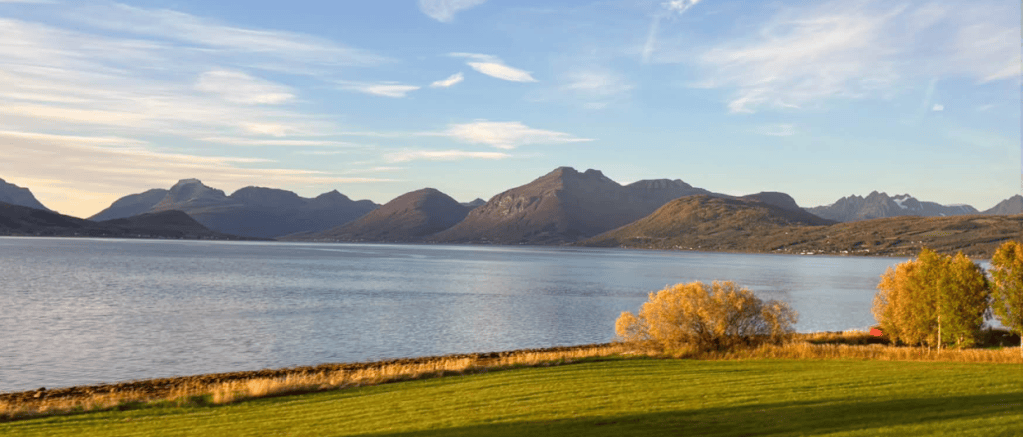
We boarded the 100 Bus from Narvik to Tromsø. This bus is a local community bus service with 99 stops from the start to finish. People got on and got off in what seem like remote locations. 4 hours later we arrived in Tromsø. Once again, the scenery was beautiful. Views across the Fjords around Narvik gave way to mountains and rural areas with holiday baches painted red, yellow or black.
We saw soldiers in a couple of villages, many of them young women. This is a reminder that we weren’t far from people who could one day decide to attack. Just a few weeks earlier NATO had announced deployments in the north to counter the Russian threat. I made me think how lucky we are in New Zealand, but also that compliancy is risky.
As the bus entered the outskirts of Tromsø, the island became visible with fishing trawlers moored just before the main bridge. Due to bridge maintenance, we took the slightly longer route via the undersea tunnel, complete with a roundabout (in the tunnel)! We found out later that the tunnel is much better for winter driving, compared to the steep bridge. Both bridges into Tromsø have a steep incline to allow ships to pass underneath.
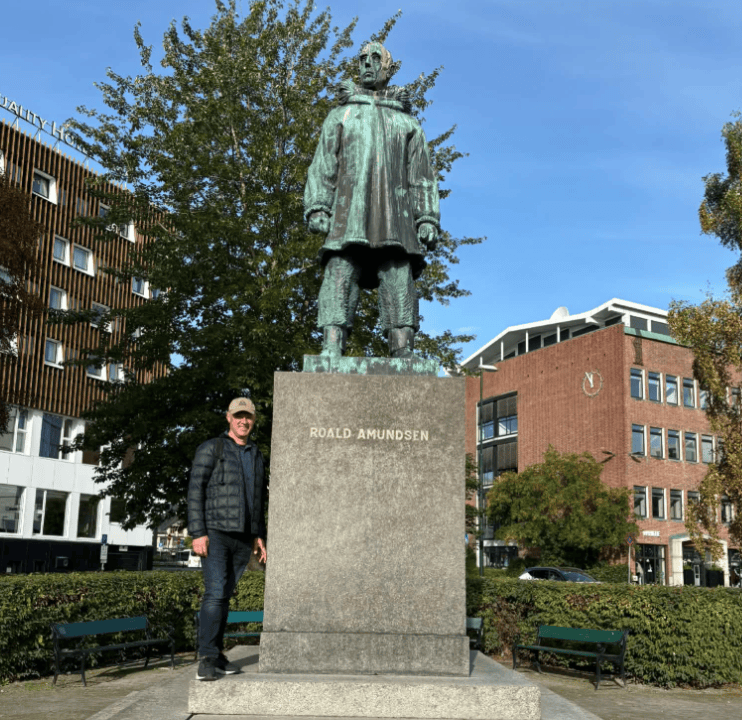
Our hotel was right next to Roald Amundsen Park, where a statue of the polar explorer takes pride of place. He used Tromsø as his base for exploring the Arctic. Roald is most famous for being the first person to reach the South Pole. Growing up in New Zealand we hear a lot about Scott’s journey and death in Antarctica and very little about Amundsen who won the race to the South Pole.
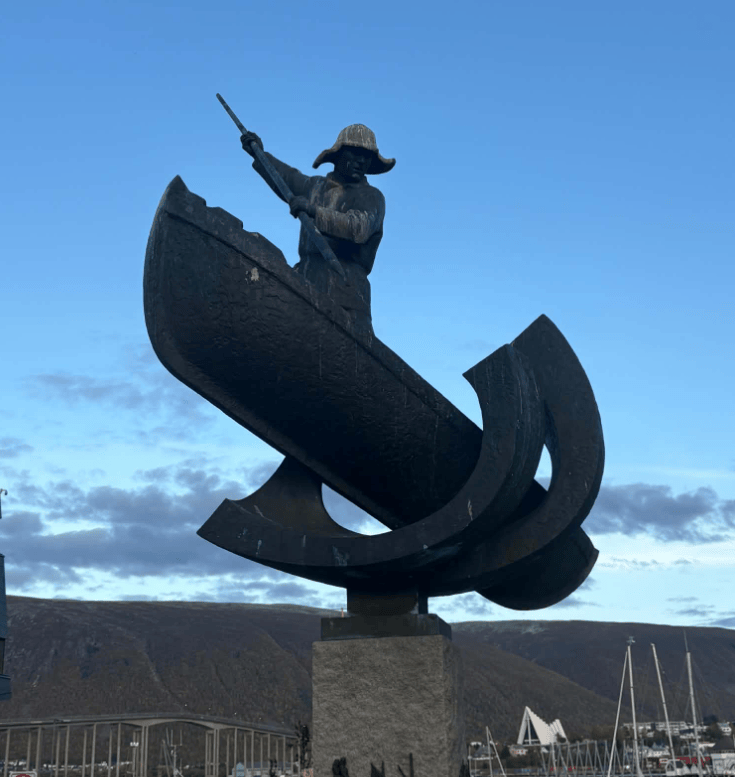
Tromsø is the largest city in the Arctic and the hub city for the Northern region of Norway. There is a major fishing industry, and tourism is also developing rapidly. There is some resentment from locals about the levels of tourism, which is understandable as it is impacting the traditional way of life older Norwegians enjoy. One fun thing is most signs and information for tourists is written only in Norwegian, while it is a little difficult, I feel like it adds to experience more than it takes away.
After a good night’s sleep, we had a guided tour to Sommerøy, a remote Fjord west of Tromsø. We stopped to learn about rock carvings dated at between 3,000 and 10,000 years old, people have been here for a long time.
On the way, we learned about farming in this harsh environment. During the 2 months of the Midnight Sun, crops and grass grow rapidly. Farmers do 2 or 3 hay cuts during the spring and summer, storing stock feed for the long dark winter period. Livestock live in heated barns. Historically, many people died in spring due to food running out at the end of winter.
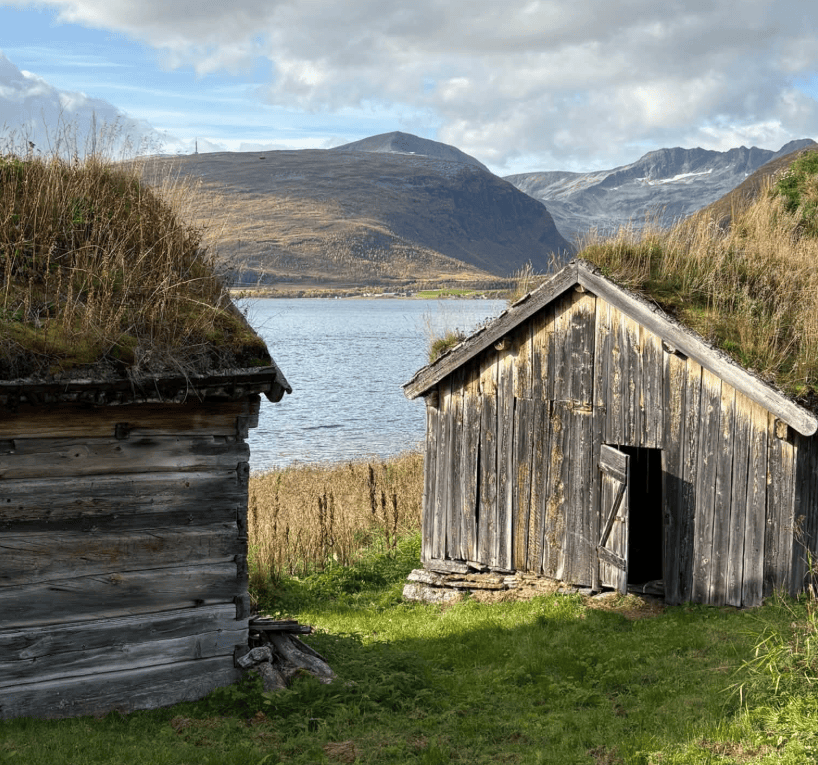
We continued to a traditional fishing village, complete with grass roofed homes. This was a common method of insulating wood houses for the harsh winters (temperatures get down to -40 C here). We also learnt about the reason for the brightly colour houses. The high contrast colours help fishermen find their way home in bad weather. The ingredients for red paint is a by-product of copper mining.
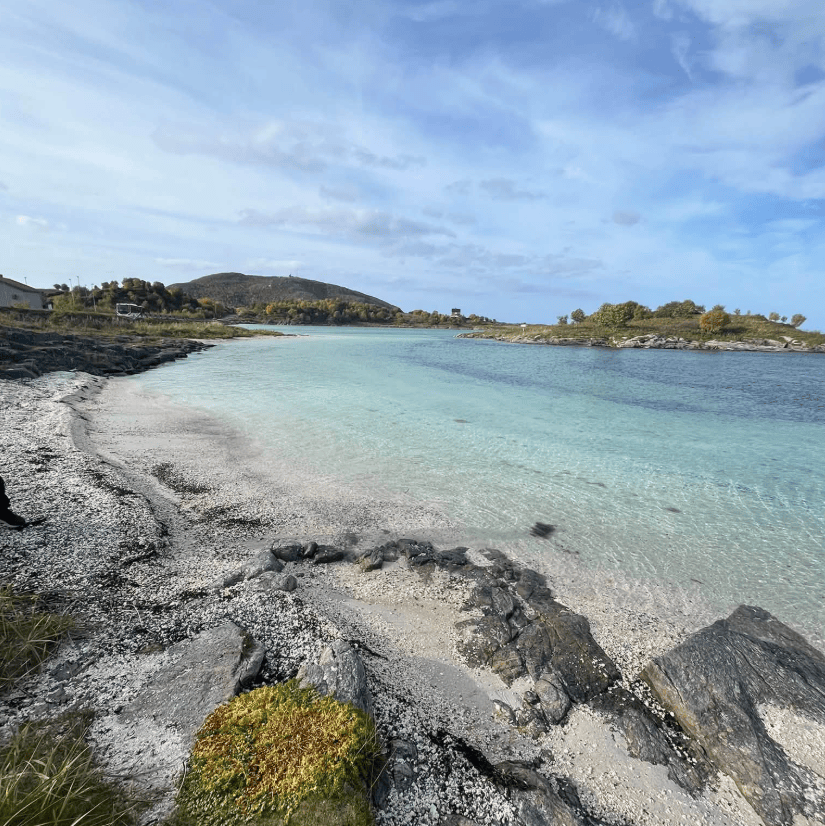
As we arrived in Sommerøy, we saw bright white sand beaches. Our guide explained the sand was from coral, something you would expect to see on tropical islands, not the cool seas for the Arctic. Speaking of cold water, this is where I ticked off a big item on my bucket list, a swim in the Arctic. The water was between 4-6 degrees, giving a strong stinging sensation as I dived under! Invigorating!
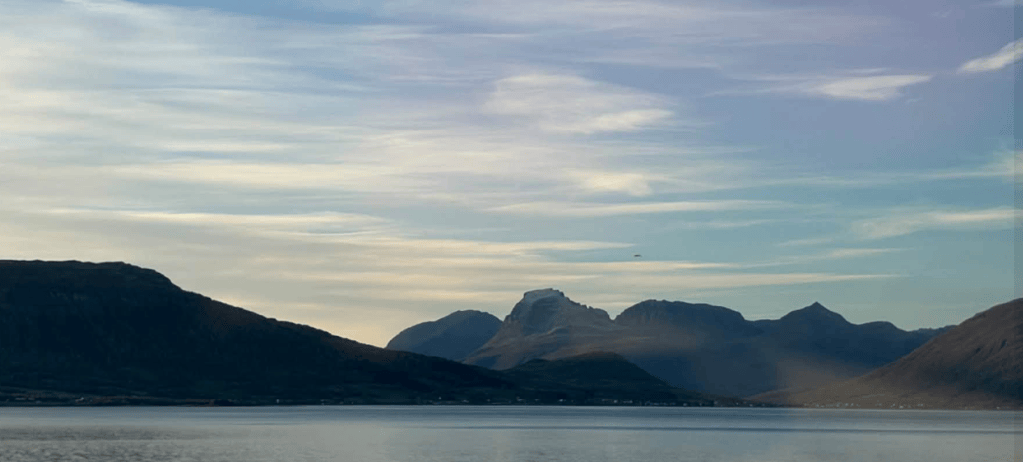
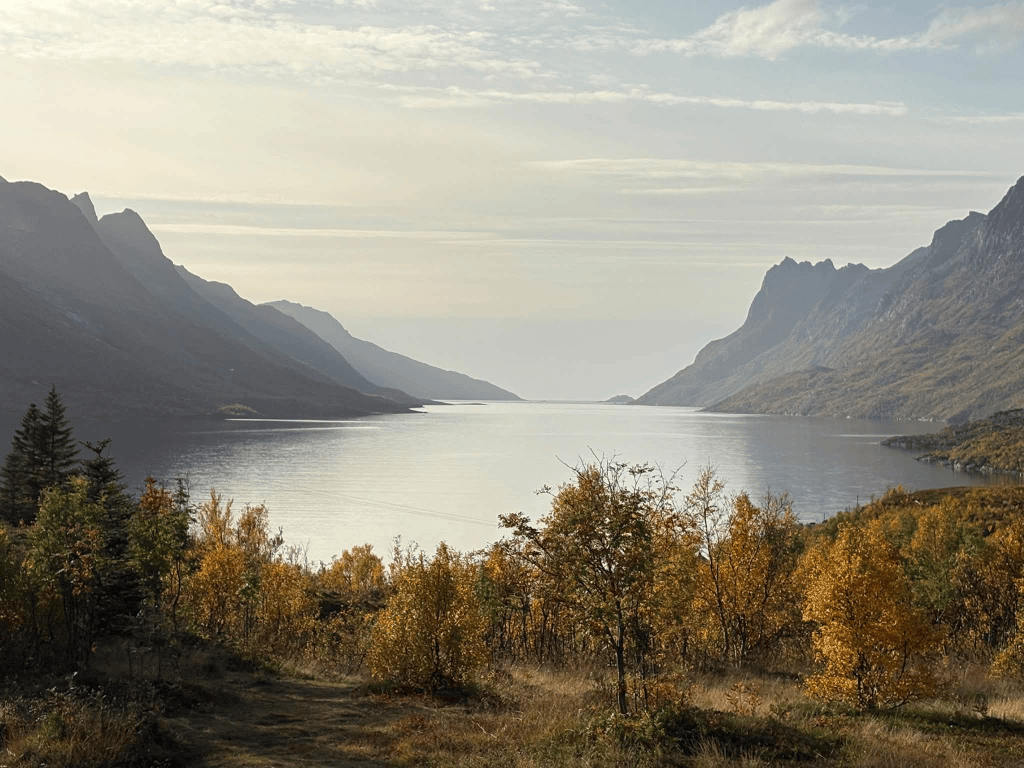
We stopped for lunch before heading back via several Fjords with breathtaking views. Our guide left the best to last, Ersfjorden is the most spectacular unobstructed view out to the ocean. The late afternoon sun only added to the dramatic views.
We drove back to Tromsø, learning about Humpback Whales and Orca using the deep Fjords to heard herring in vast numbers to feed. Both whales do this as a team communicating and driving fish into the trap.
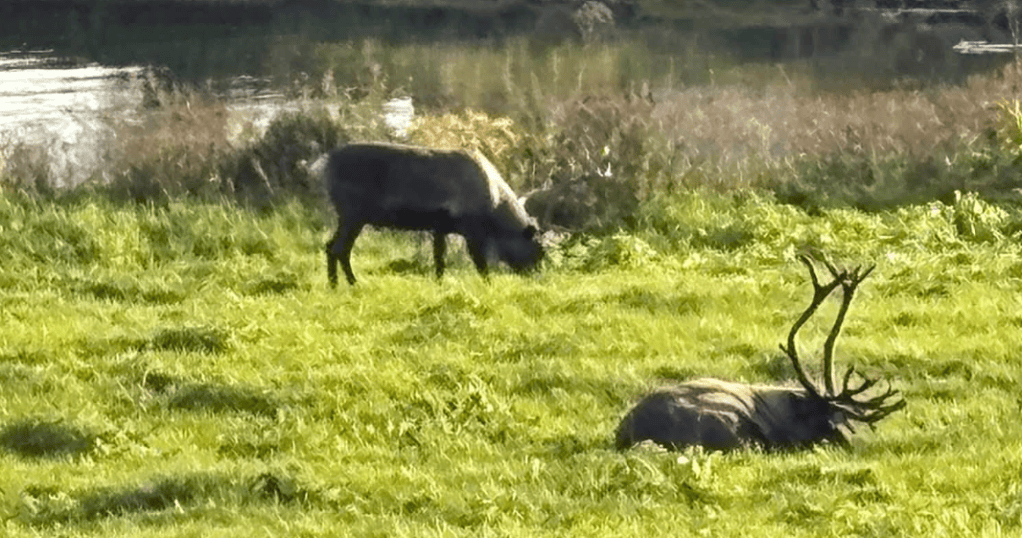
You can’t visit Arctic Norway without learning about Sami people and the reindeer. Sami reindeer herders manage vast numbers of the semi-domesticated animals. Reindeer roam across Norway in the warmer months and are very used to humans. They love a good flower garden! In winter, when food is scarce, Sami reindeer herders, round up their reindeer and provide them with food. These days they attach GPS trackers to the male reindeer, making it easier to find the herds.
Sami live an autonomous existence in Lapland, cross between Norway, Sweden and Finland. While some younger generations are urbanised, there are still many who live the traditional life which is actively protected by the Scandinavian governments.
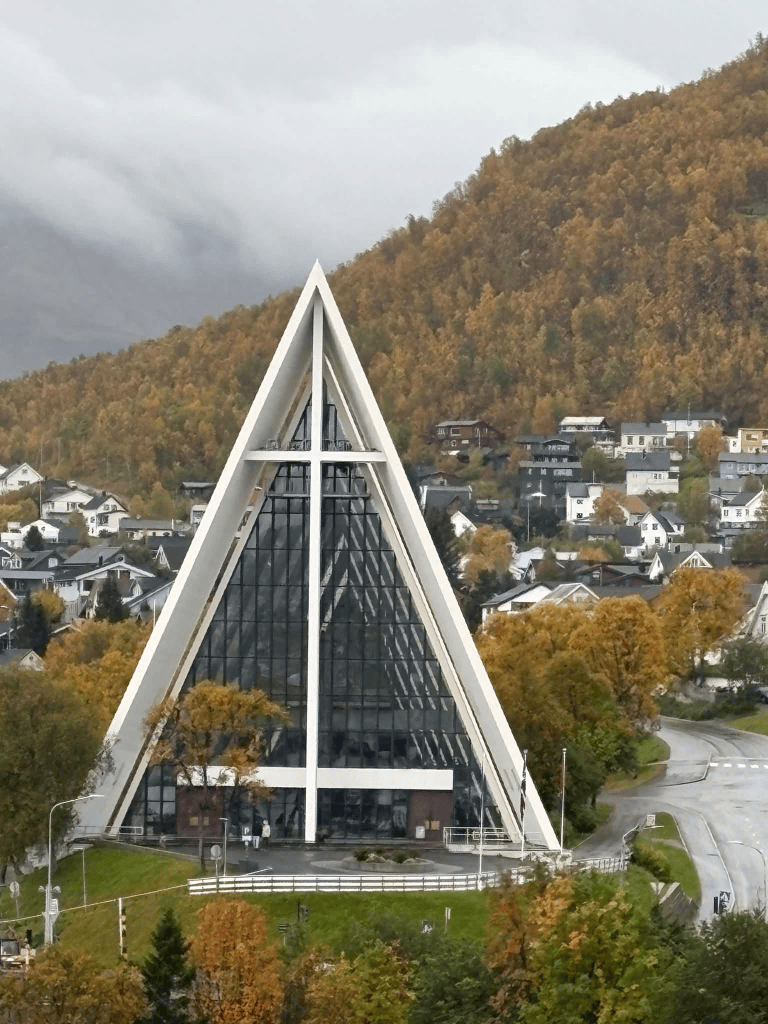
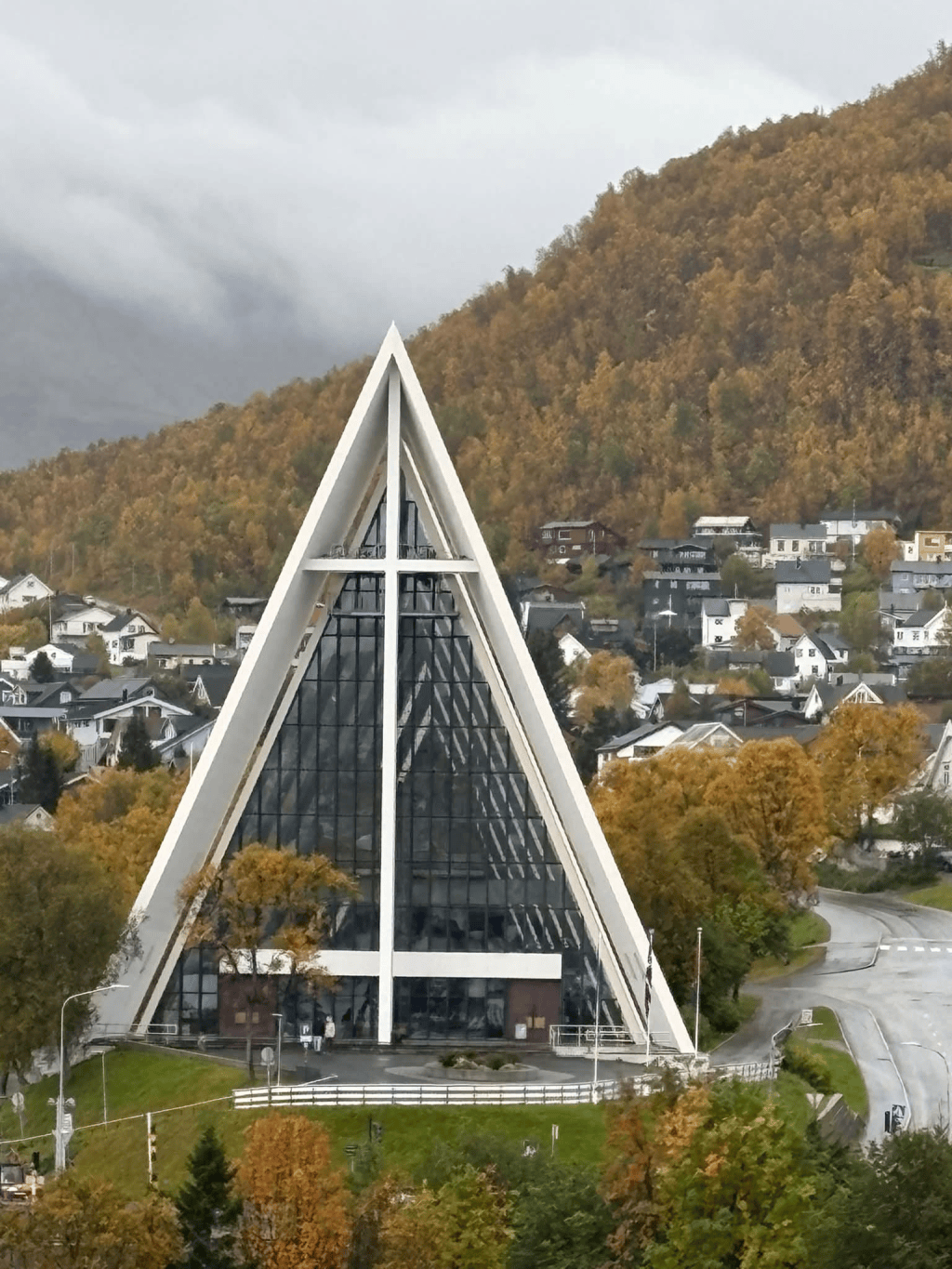
On our final day in Tromsø we walked from our hotel, across the bridge to the Arctic Cathedral, a beautiful structure inspired by one of the islands near Sommerøy. I couldn’t help but think about our own Cathedral in Christchurch. This beautiful building is a landmark visible across the city’s southern vistas, with bells that echo across the harbour calling people to mass, while celebrating the natural environment.
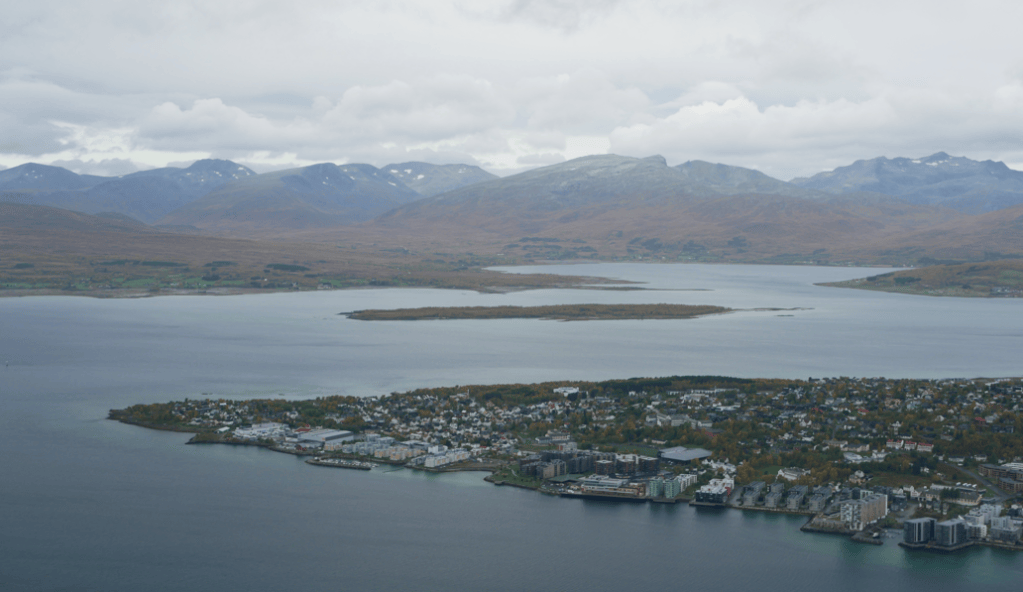
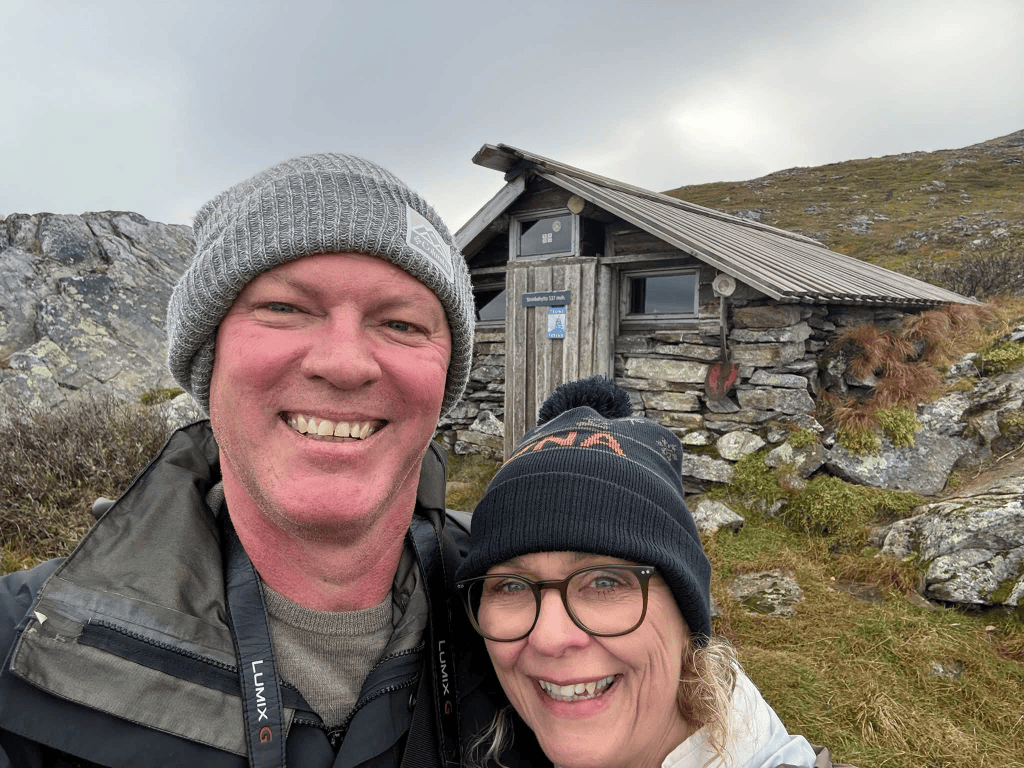
We continued along residential streets to Fjellhelsen (cable car), a short and expensive ride, but totally worth the money due to the awe-inspiring views across Tromsø, the fjord, islands and mountains beyond. If you do one thing in Tromsø, do this! We decided to walk up a little higher to get a different view and carried on to Steinbohytta (a hiking cabin) 537m above sea-level with spectacular views across Tromsø and far beyond.
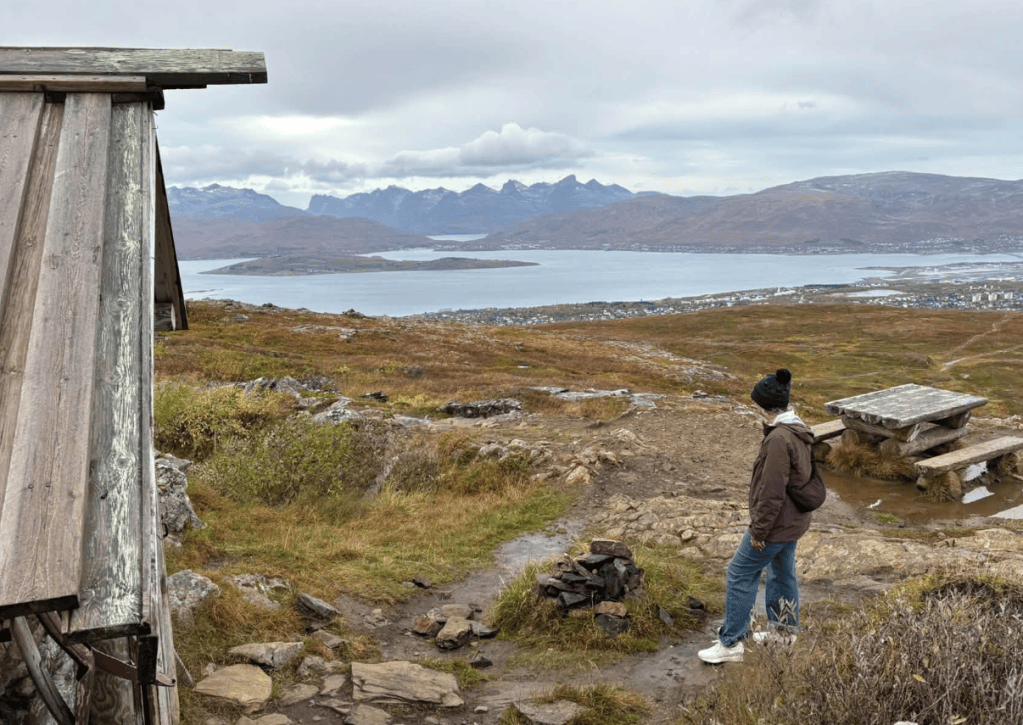
On the way, we followed tracks from other hikers (Norway doesn’t have track markers, you should just know where to go), found a small pond with alpine flowers and fields of red lingonberry plants, that contrasted the greens and yellows of the tundra environment. Taking a closer look, we could see various mosses and likens that reindeer love to eat. It would be interesting to see this changing through the seasons.
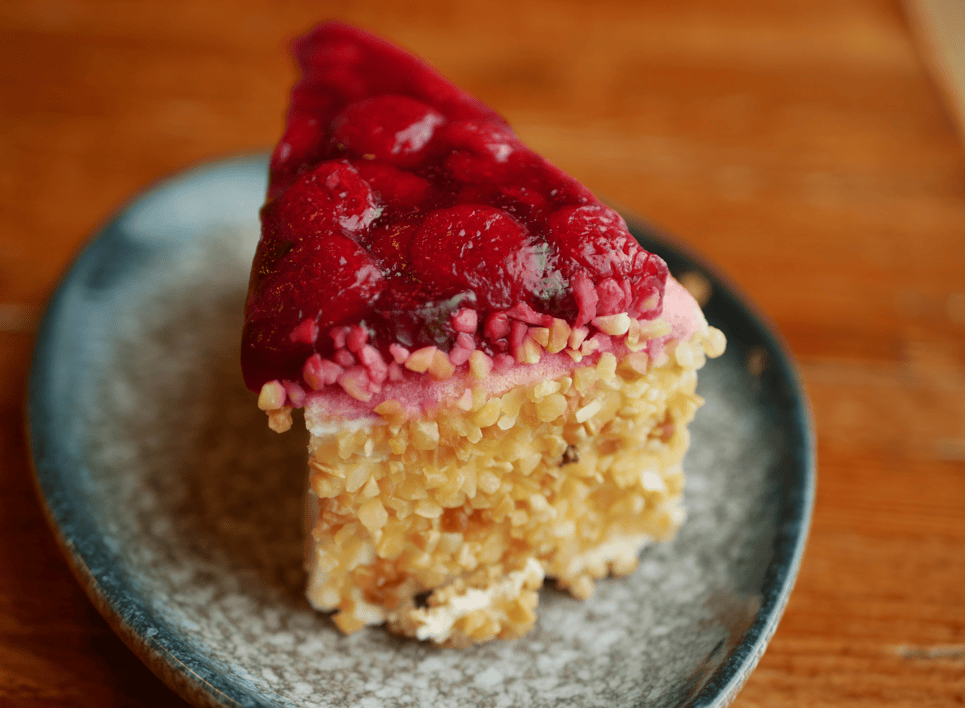
After a short break to take photos and just breath in the fresh mountain air, we started our descent via a different track. Here we saw a proper Norwegian in the wild. She was tall and blond, making big effortless strides up the steepest parts of the trail towards the summit. We were told, Norwegians pride themselves on the quality of their outdoor gear and always dress to impress in this environment. Later we saw another Norwegian in his running gear, heading down the trail at high-speed. We decided to ignore the obvious fitness difference and order a very nice cake at the Fjellhelsen café!
We walked back across the bridge and along the carless main street. Imagine Arrowtown if there were no cars obstructing the views of the beautiful old buildings. Tourist shops, restaurants, art galleries and outdoor stores dotted the street, along with the worlds northern most McDonalds. Back to the hotel the long way to get a final glimpse of the waterfront, looking across at the mountain we had been hiking on in the morning. We caught the bus to the Airport. Next stop Oslo!
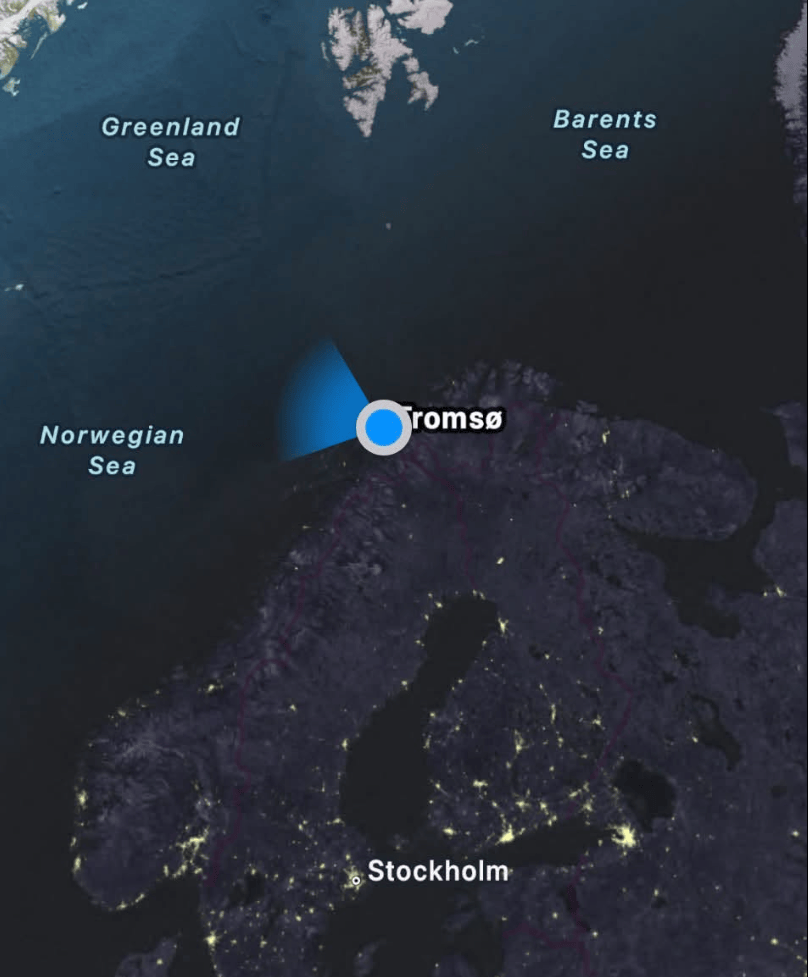
If you are thinking of travelling this far north, make sure you understand the climate. Tromsø is a place where you can experience the midnight sun in the summer months and 24 hour darkness during winter. The days shorten very quickly in September and in depths of winter it can be minus 40 degrees C.


Leave a Reply